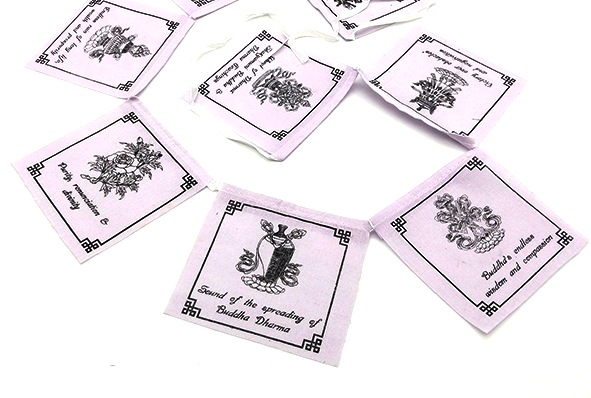
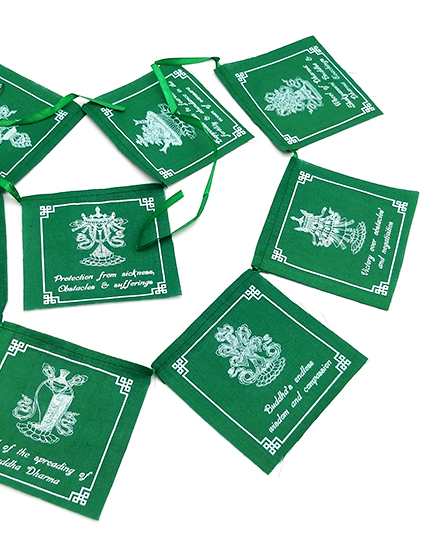
Tibetanska böneflaggor - Tibetan Eight Auspicious Prayer Flags
Färg:
Pris
Vit (Visdom/Kunskap)
49 SEK
Grön (Balans/Harmoni)
49 SEK
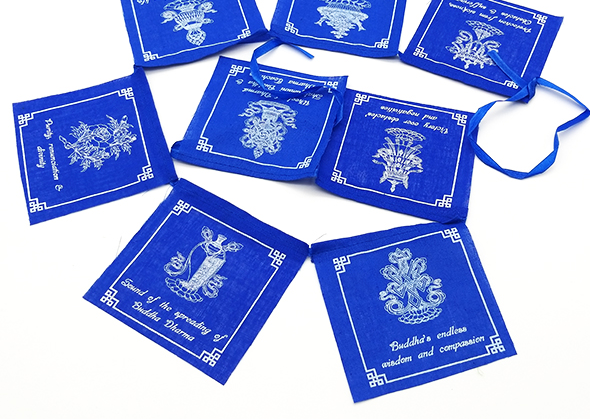
Blå (Healing/Purification)
49 SEK
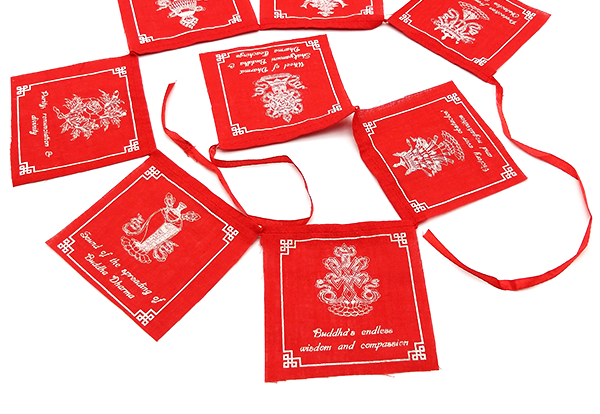
Röd (Livskraft)
49 SEK
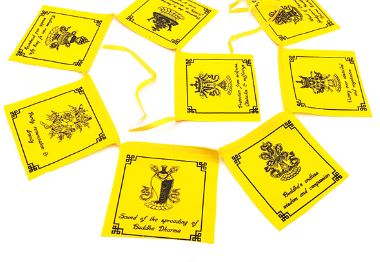
Gul (Avsägelse)
49 SEK
Beskrivning
Art.nr: 17220
Tibetanska böneflaggor - Tibetan Eight Auspicious Prayer Flags
Flagga Mått : ca. 10x10cm
Total Längd: ca. 65cm
Material: Bomull
Beskrivning:
Sträng med 8 tibetanska böneflaggor
Finns i följande färgerna vitt , rött , blått, gult och grönt , packad med 8st en färgade flaggor per förpakning. Enligt traditioner , kommer böner tryckta på dessa flaggor spridas med vinden och bidra till en positiv miljö
Blue is associated space are represents purity and healing. Akshobhya is the Buddha of this color. Ears are the body part that is represented by the color blue. Air is the element that accompanies this color. It is believed, when meditating on this color, anger can be transformed into wisdom.
White is associated with air and is the color of learning and knowledge in Buddhism. It is represented by the Buddha Vairocana. The eyes are associated with white. White is in the elemental group water. If meditated upon, white can cut the delusion of ignorance and turn it into the wisdom of reality.
Red is associated with fire and is related to life force and preservation. The Buddha Amitabha is depicted with a red body in Tibetan art. The part of the body associated with this color is the tongue. Fire is the natural element complementary to the color red. In Buddhism, meditating on the color red transforms the delusion of attachment into the wisdom of discernment.
Green is associated with water and is the color of balance and harmony. Amoghasiddhi is the Buddha of the color green. The head is the body part that is associated with this color. Green represents nature. Meditate on this color to transform jealousy into the wisdom of accomplishment.
Yellow is associated with with earth and symbolizes rootedness and renunciation. Buddha Ratnasambhava is associated with yellow. The nose is represented by this color. Earth is the element that accompanies the color yellow. Yellow transforms pride into wisdom of sameness when visualized in meditation.